Update (20:15): the Portal came back online around 19:30. Our technical supplier identified the root cause and applied a fix. Apologies for the inconvenience caused by today’s outage.
As you may be aware we’ve been having some technical problems today. The Portal site has been offline for some time with issues relating to one of our databases.
Our technical supplier has been working hard to restore the service but the problem has persisted and we currently don’t have an estimate of when the service will be back.
We’ll keep you updated on this blog and on Twitter and above all we are very sorry for the inconvenience this is causing.
Last week I posted the latest set of online application data. In summary we had our best month ever for electronic apps with almost 47,000 submitted via the site.
There was some discussion in the comments section about what could have caused the increase. I mentioned then that we had seen submission numbers rising across the board but with a particular surge of householder applications.
DCLG this week published their latest statistics on application numbers and they report a rise in household planning permissions granted.
The government’s figures show that as well as rising numbers of planning permissions for homes, the number of permissions granted overall between October and December 2015 was up four per cent on the same period a year ago, with councils granting 92,000 decisions.
You can read more on the GOV.uk press release.
The commission set up by the Institute for Public Policy Research (IPPR) to consider how to solve the capital’s housing crisis has recommended a radical package of measures. These include sweeping new powers for the Mayor as part of a ground-breaking devolution deal with central government.
Under these proposals the London Mayor and the London boroughs would commit to doubling the annual supply of new homes of all types and tenures by 2020.
In return the government would exempt London from the National Planning Policy Framework (NPPF), give the Mayor’s London Plan the same status as the NPPF and provide the Mayor with the power to force boroughs to change their plans if they don’t identify enough land for housing.
Under these proposals the Mayor and the boroughs would form a joint London Housing Committee to coordinate housing policy across the capital and to set planning fees for the capital.
Local authorities outside London would have duty to cooperate with the Mayor to help solve the capital’s housing crisis.
As part of the proposed devolution deal both the Greater London Authority and the boroughs would be allowed to borrow more for house building and infrastructure. The proceeds of stamp duty would also be devolved to the capital.
Boroughs would be allowed to levy, at their discretion, council tax on developments that fail to meet agreed building targets.
The commission, chaired by former Department for Communities and Local Government permanent secretary Lord Bob Kerslake, argued that the Mayor and boroughs should commit to identifying sufficient land to deliver 50,000 homes per year for the next decade. They should also significantly increase the volume and speed of planning approvals by increasing the capacity of planning departments and create a London planning inspectorate.
Roger Milne
Aylesbury Vale District Council announced on Monday (7 March) it will no longer contest the legal challenge made by developers, Lightwood Strategic Ltd, over the Haddenham Neighbourhood Plan. The case was due to be heard Wednesday (9 March) in the High Court.
As a result the housing policies in the neighbourhood plan have been quashed and removed from the land use strategy.
The plan was approved in September 2015 and since then the developer has been pursuing a judicial review claiming mistakes were made in its preparation.
Although parish councils prepare neighbourhood plans, AVDC has to respond to, and fund, the often significant costs of any legal challenges.
Further evidence was submitted by the developer last week and AVDC consulted its barrister about the impact of that evidence and the prospects of the case being won. On the basis of subsequent legal advice, AVDC has “regrettably” decided that the best interests of the council would be served if it dropped the case.
Councillor Carole Paternoster, Cabinet Member for Growth Strategy, insisted: “This decision should not be seen as a lessening of the authority’s support for neighbourhood plans generally, as the exact circumstances of this case are very specific to the Haddenham Neighbourhood Plan.
The planning authority is no stranger to going to court over its neighbourhood plans and has already defended successfully its Winslow plan in the High Court.
Councillor Paternoster added: “We will defend all plans where the prospects of success are reasonable. However, AVDC must take its decisions on the basis of the best interests of all its residents.”
AVDC will continue to help Haddenham Parish Council renew its plan as soon as possible. It will also be reviewing what other measures may be needed to minimize the chances of such errors occurring again with other neighbourhood plans.
The developer has submitted a planning application for land at Haddenham which is the subject of a forthcoming public Inquiry.
Roger Milne
The government was warned this week that starter homes in London would be inaccessible to between 70 and 80 per cent of private renters and in most of the country, those on low incomes will not be in a position to benefit from the initiative.
That was the stark message highlighted in the Upper Chamber where the administration’s flagship Housing and Planning bill is being scrutinised line by line.
The messenger was crossbencher Lord Bob Kerslake the former permanent secretary at the Department for Communities and Local Government who quoted figures from the latest assessment produced by housing pressure group Shelter.
The peer stressed: “these figures put it beyond doubt that, at least in London, those who will benefit from this gift are a very small proportion of private renters”.
Peers on all sides are frustrated that the government has not yet published the secondary legislation and draft regulations that will flesh out the starter home regime.
Government minister Baroness Williams of Trafford has been unable so far to promise that these will be published by the time the legislation reaches Report Stage in the Lords.
During exchanges last week, though, she did promise that the department would “bring forward” a technical consultation on the bill’s Clause 4 which sets out the requirement for the provision of starter homes in residential development.
“The consultation will recognise that there are some developments where the inclusion of starter homes could help to secure a diversity of tenures and support mixed communities, but that compulsory inclusion could alter the viability [of some regeneration schemes]“ she explained.
View the latest news on the progress of the Housing and Planning bill
Roger Milne
Mixed fortunes for two significant housing schemes, both the subject of recovered planning appeals determined by Communities secretary Greg Clark recently.
One involved proposals for up to 220 new homes, 66 of which would be affordable, and the provision of new playing fields on land at Loose near Maidstone, Kent next to the campus of the New Line Learning Academy which also included a free school, the Tiger Primary School and a special needs school run by the county council which was involved in the application.
The project was originally refused by the borough council on the grounds of lack affordable housing and impact on an area of ancient woodland. Subsequently the planning authority withdrew those objections. At the hearing the council could only point to a 2.1 year supply of housing land. The planning inspector who held the inquiry recommended the appeal should be dismissed and the SoS agreed.
Clark’s decision letter refusing the scheme acknowledged the housing benefits of the proposals but agreed with the inspector that the design of much of the scheme was “cramped, unrelieved and somewhat anonymous”. It was also in conflict with the development plan and posed significant traffic and safety issues for the local highways network.
The other set of proposals involved plans for around 180 new homes on two sites at Buntingford which the local planning authority, East Hertfordshire District Council, had failed to determine within the prescribed time. The inspector recommended the appeals should be allowed and Clark agreed.
His decision letter agreed with the inspector that the proposals would be sustainable developments and provide both market and affordable housing in an area with a significant under-supply of homes. Clark acknowledged the loss of 14 hectares of the best and most versatile agricultural land and the fact that the schemes were in conflict with local development policies, albeit ones which were mainly out of date.
View the recovered appeal: Area 2 and 3, land south of Hare Street Road, Buntingford
View the recovered appeal: land at Boughton Lane, Loose, Maidstone
Roger Milne
Concerns over noise and local air quality which pose a major question mark over the expansion of airport capacity in south east England are significant but not insurmountable issues according to a report from the Independent Transport Commission.
The ITC is Britain’s foremost independent land use and transport think tank and reflects the views of many transport academics and professionals.
The report noted that continuous improvement in automotive technology should significantly reduce the impact of airport traffic on NOx levels (currently a major problem).
It also argued that the introduction of aircraft built on new technology like the Boeing 787 and Airbus A350 would deliver “quantifiable improvements in noise”.
However the commission has highlighted that the two airports vying for expansion (Heathrow and Gatwick) remain behind global leaders in terms of high levels of access by public transport.
The report called for closer integration of the airports’ public transport access with the rail network not just to London but also the rest of the South East, Midlands and the West.
“These findings suggest that noise and local air quality impacts can be managed downwards given the right mix of operational, policy and technological development, while incremental improvements in carbon emission output are being delivered on an annual basis” insisted ITC commissioner Dr Stephen Hickey.
Roger Milne
Latest housing stats
Latest official figures show that the number of planning permissions for homes rose six per cent compared to the same quarter a year ago.
The number of major applications being processed swiftly by local authorities is also at an all-time high with a record 81 per cent decided within the required time.
The number of planning permissions granted for homes in 2015 was the highest since 2007.
According to analysis of Glenigan data also published this week permission was granted for 253,000 homes during 2015.
Government figures show that as well as rising numbers of planning permissions for homes, the number of permissions granted overall between October and December 2015 was four per cent greater than a year earlier, with councils granting 92,000 decisions.
Some 10,100 applications for prior approval for permitted development rights were received during October to December 2015, up 16 per cent from the same quarter 12 months ago.
New planning regime for key Welsh infrastructure schemes
New Welsh legislation came into force last week designed to ensure that key infrastructure projects are determined at the national level and are made directly to ministers rather than the local planning authority.
The Planning (Wales) Act together with secondary legislation establishes a new process for the consenting of so-called Developments of National Significance (DNS).
This process is designed to ensure timely decision-making, particularly on renewable energy projects as well as other nationally significant developments in Wales.
Planning and natural resources minister Carl Sargeant said: “The DNS projects include energy projects with a generating capacity of between 10 and 50 megawatts, airports, railway infrastructure, dams and reservoirs, and other types of development requiring planning permission which are considered to be of national significance.
“I’m also planning to expand the thresholds to capture all onshore wind projects above 10 megawatts.”
Community assets progress
The Community Rights movement continues to make progress with latest figures showing more than 3,000 buildings, green spaces and other valued local assets protected.
More than 3,000 assets are now listed including 1,200 pubs, over 150 local sporting facilities, including football stadiums, bowling greens and cricket pavilions, right through to Blencathra, one of the Lake District’s best-known peaks.
To promote the programme, the government has produced an interactive map listing protected assets and other community rights uses throughout the country.
NIC bangs drum for smart power
The National Infrastructure Commission has concluded that so-called ‘smart power’ involving increased connectivity, energy storage and more flexible demand flexibility could help the UK meet its 2050 carbon targets and secure the UK’s energy supply for generations.
That’s the assessment of the Commission which has published its first report urging the government to pursue additional interconnectors with other European countries. The commission has also argued that the UK should become a world leader in electricity storage systems.
Go-ahead for Manchester airport expansion
Manchester City Council has approved ambitious proposals for a 15-year upgrade of Manchester Airport involving the demolition of Terminal 1, and a 900,000-square-foot extension to Terminal 2.
The ‘Airport Transformation Programme’ is designed to increase the airport’s capacity from 20 million to 30 million annual passengers by 2025.
This will mean the expansion and reconfiguration of Terminal 2 to become the airport’s main terminal building, along with further improvements of Terminal 3 to cater for increased demand and an expanding flight schedule.
As well there will be new stands and piers, an improved surface access road system and significant additional car-parking.
Think tank urges ministers to face-down Nimbys
Right of centre think tank the Institute of Economic Affairs has urged the government to solve the housing crisis by removing restrictions on development in the green belt and face-down opposition from Nimby groups. The think tank has also made the case for replacing the council tax with a local Land Value Tax
The Institute argued that government interventions such as the Help to buy scheme, changes to inheritance tax and higher tax for buy-to-let landlords were all steps in the wrong direction.
The think tank said that boosting homeownership should not be a policy aim in its own right as this failed to address the overall lack of supply.
It concluded that what was needed was improving affordability across the spectrum of different housing types.
Seaside boost
Clevedon Pier, the UK’s only Grade 1 listed pier is one of eight projects to receive a cash boost to create jobs and training places, and help seaside towns attract visitors all-year round, Communities Minister Mark Francois has announced.
The schemes are to receive a share of an additional £800,000 from the government’s Coastal Communities Fund.
The projects are to be given the extra funding to help continue work that will create jobs, attract investment and boost the local economy.
HCA review
The Department of Communities and Local Government has issued its call for evidence as its review of the Homes and Communities Agency (HCA), the national housing, land and regeneration agency, gathers pace.
The DCLG is particularly interested in the following:
- Are the purpose and priorities of the HCA correct for the future?
- How effectively does the HCA carry out its functions and how could it do so more effectively to meet future challenges?
- How effectively does the HCA work with customers and partners?
- What skills does the HCA require for the future and does it possess these?
- How successful is the HCA is in delivering its objectives and could it improve?
Business regulation probe
Business Secretary Sajid Javid has launched a review of the way local authorities regulate businesses. This exercise will take into account “burdens imposed by planning and building control, housing regulations, food safety, standards and hygiene, environmental protection and health and safety amongst others.”
The administration said it would seek evidence on everything “from how inspections and visits are conducted and how data is requested through to guidance, advice and how accountable and responsive local authorities are to business needs”. The scope of the review will not include fees and charges, however.
Hull developments
Plans for a state-of-the-art 3,500-seater music and events centre and the redevelopment of Hull’s historic Beverley Gate have been given the go-ahead by councillors.
Hull City Council’s planning committee have approved plans for the ‘Hull Venue’ this will include a 3,500 capacity concert auditorium with the flexibility to reduce to a 2,500 all-seated event and exhibition space plus 800 capacity conference auditorium.
The council has committed £36.2m towards the cost of building the complex on the site behind Princes Quay shopping centre and this investment will also modernise Osborne Street car park.
Developers Avant Homes have dropped plans to contest the affordable housing contribution of £1.8 million required under the s106 agreement negotiated with Sheffield City Council as part of the approval for an 88-home development at a former factory site in green belt on the edge of the city.
The developer remains convinced that its consented proposals won’t be viable on the basis of that s106 contribution and has told the planning authority it wants to develop an alternative scheme for the site which is acceptable in planning terms “and viable”. Officers have agreed to work with the developer “to secure an appropriate and acceptable redevelopment scheme for the site”.
London round-up
- London’s firms want the capital’s next Mayor to commit to building 50,000 homes a year, press the government to build a new runway in the South East and to continue to implement the existing 2050 London Infrastructure Plan. As well the CBI’s London Manifesto for the mayoral candidates has called for a stronger voice for businesses on the London Enterprise Partnership (LEP). Meanwhile a London Assembly report has urged the next mayor to ensure Business Improvement Districts play a bigger role in regeneration although it also stressed they needed stronger governance and accountability.
- Amsterdam-style “pop-up” housing could cut the cost of London’s rental market by a third, a report from the London Conservatives has claimed.
- Kingston Council has refused permission for the 705-home redevelopment of the Toby Jug site at Tolworth on the south western flank of London against the advice of officials.
Maidenhead make-over
The Royal Borough of Windsor and Maidenhead has launched a consultation on its draft West Street Opportunity Area Supplementary Planning Document (SPD) which sets out proposed planning guidance for the redevelopment of one of the town’s key development sites.
Plans for the redevelopment of the area include new office and retail floor space and over 300 new homes as well as restaurants and a landmark building to create a gateway to the town centre.
Lake District Unesco bid
The Lake District is the sole UK nomination by the government for UNESCO World Heritage site status.
Oxfordshire affordable homes waiver agreed
A planning inspector has backed an appeal by a developer who successfully argued that the Vale of White Horse District Council’s requirement to provide 40 per cent affordable homes in a 200-unit scheme at Faringdon, Oxfordshire should be waived in its entirety if the proposals were to climb off the drawing board.
View the planning application details
Scottish Civic crisis claimed
Scotland is facing a crisis of civic pride, trust and identity according to Professor Cliff Hague, a planning academic from Heriot- Watt University.
He delivered the Scottish Civic Trust’s inaugural annual lecture last week and blamed the crises on a number of factors. These included the fiscal neutering of local government, a centralised planning regime, an unaccountable appeals system, the growing privatisation of the public realm and a heritage movement whose voice was becoming fainter because of an ageing demographic.
Hague also warned of a loss of confidence in the conservation movement and highlighted what he called a “shadow planning system where developers operate through privileged channels and faceless investment houses have more right to decide what should happen in places than the citizens (now third parties) who live in them.”
View a transcript of the lecture (PDF)
Legal round-up
- Forest of Dean District Council has successfully challenged a planning inspector’s decision to allow an appeal for an 85-home scheme proposed by Gladman Developments. The permission has now been quashed following a judgment which is seen as providing an important ruling on the tests to be applied in respect of the National Planning Policy Framework (NPPF).
- The Scottish Court of Session has dismissed a challenge by the developers of the 114 megawatt Glenmorie wind farm over the government’s decision to reject the 34-turbine scheme earmarked for a site in the Highlands.
- Four conservative local authorities are threatening to take legal action against the government unless the proposed third runway at Heathrow is ruled out. The councils claim that expansion of the airport in line with the recommendations of the independent Airports Commission would be illegal. Solicitors acting on behalf of Hillingdon, Richmond, Wandsworth and Windsor and Maidenhead councils claimed the outcome of the study was based on a flawed assessment of the impacts on air quality and noise.
- A judicial review of Westerleigh Group’s consent for a crematorium scheme in the Watermead area of Aylesbury, the subject of a challenge by the parish council, has found in favour of the proposals approved by the local planning authority, Aylesbury Vale District Council.
- A developer who lost a £150m contract to revamp Winchester city centre is set to challenge the decision in court.
Roger Milne
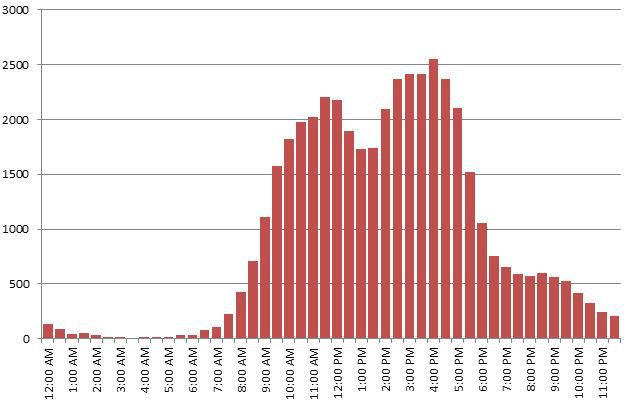
February had the largest number of applications ever with 46,874 applications – an increase of 16.4 per cent on February 2015.
The workday average was 2,073 apps per day, up 10.9 per cent from February 2015, a healthy increase.
If this trend continues we may see over 50,000 applications submitted in March, even with an early Easter popping in at the end of the month.
I’ll keep you updated.
Peers from across the political spectrum queued up to voice concern over the government’s policy on starter homes this week during detailed discussion on the Housing and Planning Bill. Ministers promised clarity soon on how the policy will be implemented.
Contributors to five hours of debate on Tuesday warned that the administration’s starter homes initiative would crowd out other forms of housing tenure and hamstring local authorities’ ability to provide for locally determined housing need.
Councils’ ability to choose a mix of home ownership tenures for planning obligations (i.e. shared-ownership or rent-to-buy) was completely fettered by the bill as drafted, complained Liberal Democrat peer Lord Tope.
Cross-bencher Lord Kerslake, former permanent secretary at the Department for Communities and Local Government, noted that the starter home concept had gone from being an “interesting, innovative idea with some rather ambitious numbers attached to it to being the main source of new supply”.
Peers lined up to claim starter homes would be unaffordable for the majority of the population and risked distorting the housing market. The Upper Chamber heard that civil servants have so far been unable to finalise any sort of modeling on the effect of the legislation— financial, social or the impact on housing supply.
Baroness Hollis of Heigham warned : “For the whole of the next decade, if the government have their way, the affordable housing programme for those in the greatest need, who have least leverage in the market, whose need is highest, will have just one option, starter homes—which, we are told by Savills, will not benefit 90 per cent of them. What on earth do the government think they are doing?”
Government Minister Baroness Williams of Trafford denied the administration’s focus on starter homes was intended to be at the expense of affordable housing.
“The government is committed to investing further in the delivery of affordable houses and local authorities will still be expected to plan their housing development around the needs of their communities.
“However, our manifesto was clear that we would build 200,000 starter homes and this is central to our housing ambitions.”
She promised clarification soon on clause 4 of the bill which provides for a starter home requirement for new developments.
“We will publish details in a technical consultation shortly and will take into consideration all views so that we get this right. We want a degree of flexibility with the requirement to allow for exemptions and viability considerations.
“Once in place, local planning authorities will need to apply their plan policies including those on affordable housing in light of the legal starter homes requirement. We expect them to seek other forms of affordable housing, such as social rent, alongside the starter homes requirement where it would be viable to do so.”
She added: “Local planning authorities have the option to release more land for housing to ensure they are delivering as much housing of all tenures as is needed”.
Roger Milne


 Planning Portal Blog