More capability across the planning journey
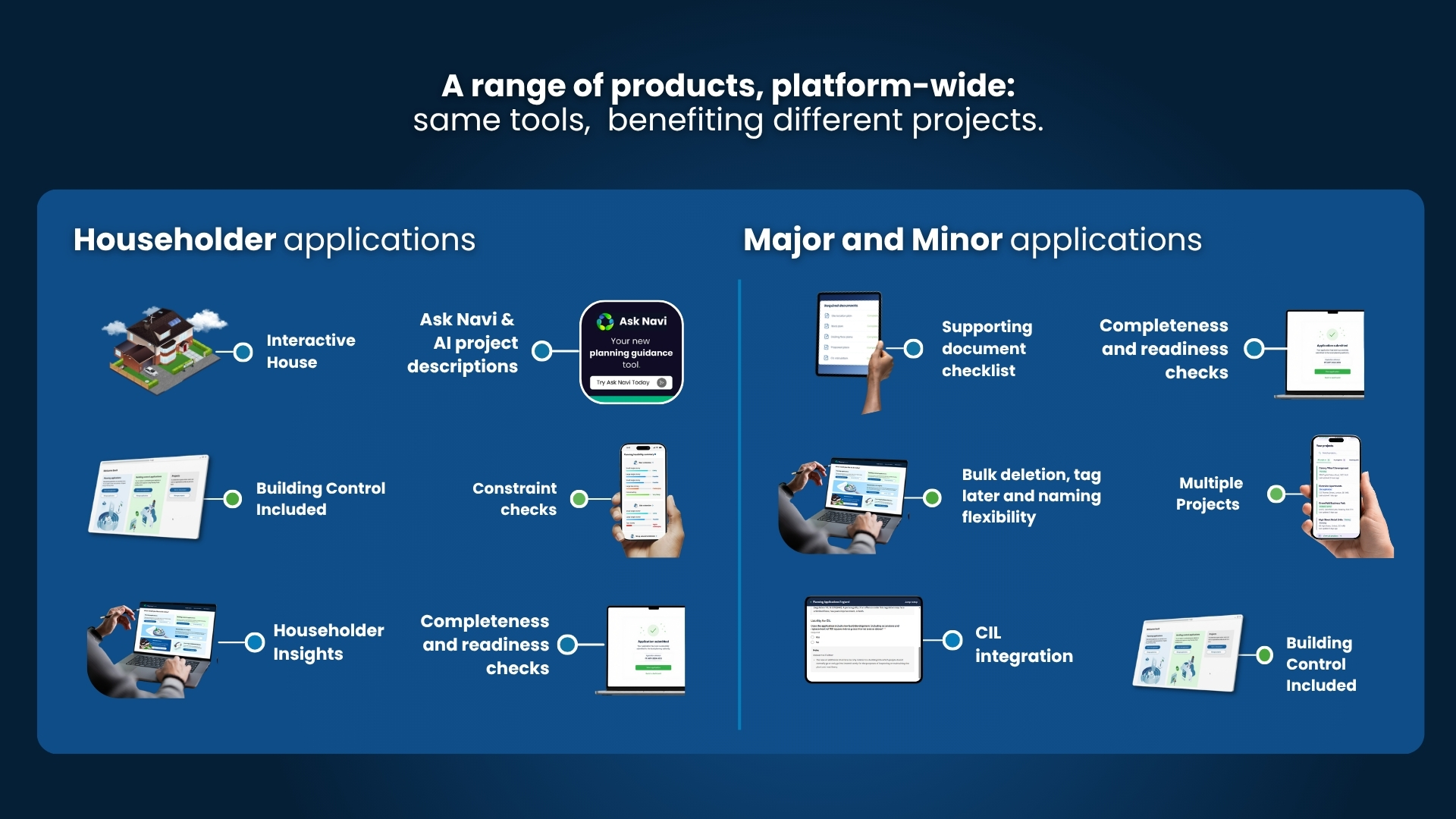
A closer look at how Band 2 supports different planning journeys; and the capabilities we’re continuing to build into Planning Portal.
Earlier this month, we introduced a new structure for Planning Portal alongside a significant expansion of the capabilities available across the planning journey.
Band 2 brings together application types that, based on our assessment, typically have more requirements and benefit from greater platform capability.
The band is determined by the application type and, where relevant, the type and scale of the proposed development. This means the same application type can sometimes fall into different bands, reflecting the different requirements and level of platform capability typically involved. However, the application itself is only part of the picture.
Planning Portal has evolved significantly beyond the point of submission. We are bringing more guidance, intelligence, checks and smarter workflows into the journey to help users understand more earlier, prepare more efficiently and identify potential issues before they submit.
For Band 2, that means a broader range of capability used across the journey, with different tools and functionality supporting different users and application types, bringing a multitude of various benefits.
For householders: more support from the start
Planning often begins long before someone is ready to submit an application.
What might be possible with my property? What permissions could I need? Are there constraints I should know about? What information will I need to provide? And what happens after planning?
Planning Portal increasingly supports that wider journey.

Interactive House helps homeowners understand the planning and Building Control requirements that can apply to common home improvements, while Ask Navi makes Planning Portal guidance and national planning policy easier to navigate through conversational AI.
Householder Insights brings together relevant planning history, activity and planning constraints associated with a property, helping homeowners better understand its planning potential and identify important considerations earlier. This can help inform what may be possible and manage expectations before significant time and money are committed.
As an application is prepared, national planning constraint checks can surface relevant site considerations earlier, helping applicants understand factors that may need to be considered. We also signpost applicants to the relevant local authority’s local requirements and checklists, helping them understand what is required for their specific application before submission. AI-assisted project descriptions provide additional support in preparing clearer information about the proposed development.
And there is more to come.

From October, enhanced completeness and readiness checks will provide another opportunity to identify common errors before submission, while there is still time to address them.
Support can also continue beyond planning. Planning and Building Control are closely connected, with many projects needing to consider Building Control requirements alongside the planning design. Building Control is included within the Planning Portal journey, enabling users to consider what comes next, pre-populate relevant information and progress seamlessly into Building Control through the same platform, where required, at no additional Planning Portal charge.
Taken together, this is about much more than the point of submission. It is a growing set of capabilities designed to help homeowners understand more before they apply, prepare with greater confidence and navigate a more connected journey from early planning considerations through to Building Control compliance.

For professionals: less administration, greater control.
Whilst professionals have additional needs, they can also benefit from many of the same capabilities available across the householder journey, from Householder Insights and site-specific constraint information to Ask Navi and pre-submission checks. For example, Householder Insights can bring planning history, nearby activity and relevant constraints together in one place, reducing the time needed to research individual sources and helping inform early conversations with clients about development potential and site considerations. The report can also be shared directly with clients, providing a useful basis for those early discussions.
Professionals preparing applications regularly also have additional needs, particularly around reducing repetitive administration and managing increasing volumes of information and supporting documentation.
Planning consultants, architects and agents who prepare applications regularly bring significant knowledge and expertise to the process. Their challenge is often different: the time consumed by repetitive administration and managing increasing volumes of information and supporting documentation.
Feedback from professionals has helped shape many of the capabilities we are building into Planning Portal.
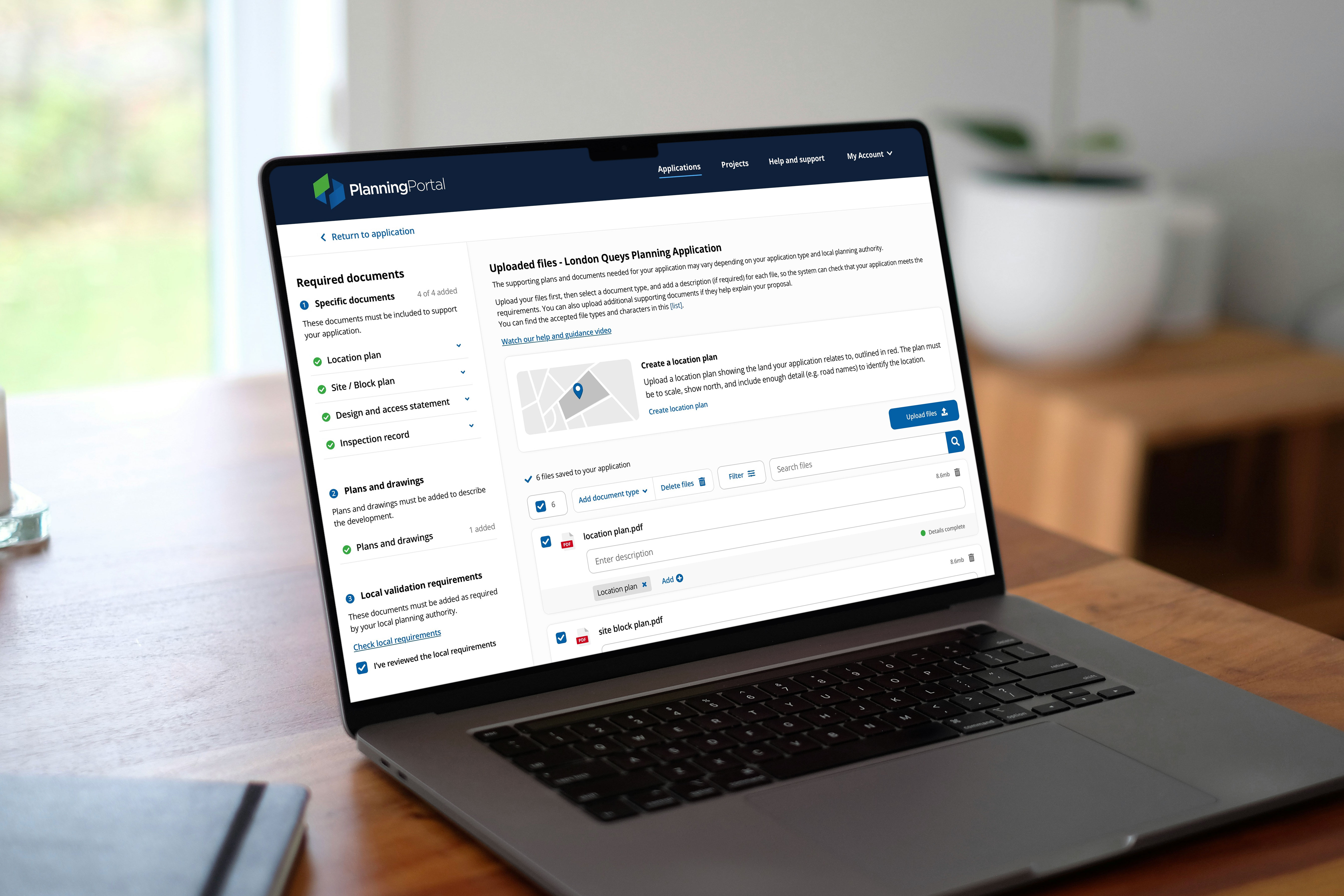
Bulk document upload and classification allows complete document sets to be uploaded before individual files are classified, reducing repetitive steps when managing larger submissions. Additional benefits include bulk deletion, more flexible naming conventions and greater resilience, allowing uploads to continue if one file fails.
Document management tools, including a live checklist and clearer progress and error messaging, provide greater visibility of what has been supplied, what is still required and where something may need attention.
CIL integration brings another important part of application preparation into the journey, while Multiple Projects provides greater capability for professionals managing applications at scale.
Pre-submission document checks add another opportunity to identify potential issues before an application is sent. During testing of our new document workflow, professional users told us that these improvements alone could save several hours on a larger scheme.
For professionals, the focus is clear: less repetitive administration, greater visibility and control, and more time for the work where their expertise adds the greatest value.
But there is a wider challenge we are also working to address.
Around half of planning applications nationally are invalid when first submitted, with recurring issues including missing or incorrect information, application requirements and site-specific considerations. Building more intelligence and checks into the journey creates opportunities to address more of these issues earlier, while also making application preparation more efficient for experienced users.

Supporting more than the application itself
Not every improvement is something an applicant sees on screen.
We also continue to invest in the direct connections between Planning Portal and all local authority planning teams, improving how application information and data move most efficiently through the system and helping authorities receive applications swiftly in the formats they need.
That underlying infrastructure is an important part of Planning Portal’s role, supporting not only the person preparing an application, but the wider journey that information takes once it is submitted.
Different journeys need different capabilities
Band 2 covers a broad range of application types, from householder projects through to much larger and more involved proposals. Their scale can be very different, and so can the way people use Planning Portal to prepare them.
Scale alone does not determine the level of platform capability involved. Different application types can draw on many of the same underlying capabilities, from site-specific constraint information and document and data handling to application guidance and checks, delivering different efficiency and insight benefits depending on the application and the user.
For a homeowner, that might mean understanding a property’s planning potential, accessing trusted guidance, identifying relevant constraints, getting additional support during application preparation and moving more easily into Building Control.
For a professional, it might mean handling substantial document sets more efficiently, keeping track of requirements, managing multiple projects at once and carrying out additional checks before submission.
The value of those capabilities will therefore look different from one application to another. What matters is that the platform can provide the appropriate support across the different journeys within the band.
That is also why the bands are not determined by assessing the individual complexity of every proposal. They are based on the application type selected and our assessment of the complexity and level of platform functionality typically required to support that type.
Application types within Band 2 are, overall, more likely to require greater platform functionality than those within Band 1. This is reflected in the different band structure and pricing.
“Planning Portal supports a vast range of applications and users, from someone improving their home to professionals managing complex projects at scale. Their needs are very different, and the capabilities we provide need to reflect that.
At the same time, we must look at the planning system as a whole. Too many applications still reach local authorities with missing information or issues that could potentially have been identified earlier. Our opportunity is to use the data, technology and national infrastructure behind Planning Portal to address more of those issues while also making the journey more efficient for the people preparing applications.
That means investing in what users see – better information, smarter workflows and stronger checks – as well as the infrastructure and connections behind the service. And we’re not standing still. We will continue to work with professionals, homeowners and local authorities to understand where we can make the greatest difference and keep expanding the capabilities available through Planning Portal.” – Geoff Keal, CEO, Planning Portal & TerraQuest

We’re continuing to build
What is available today is not the end point. The changes introduced in September form part of a broader programme of continuous development, shaped by feedback from homeowners, planning professionals and local planning authorities, alongside what we learn from millions of planning journeys through Planning Portal.
Enhanced completeness and readiness checks are coming in October. Over time, these will become increasingly tailored, with local validation checklists bringing authority-specific requirements further into the application journey and greater use of site-specific constraints helping shape the information applicants are asked to provide.
Ask Navi will continue to evolve too, moving beyond answering questions towards helping users take action, including identifying the appropriate application type and turning conversations into draft applications.
And for professionals managing multiple applications, Project Workspaces will bring related applications, people and information together, with planning and Building Control sitting side by side, facilitating greater collaboration for the preparation and collation of providing architectural plans and designs or specialist information by external professionals.
We will continue to listen to feedback, understand how these capabilities are being used and use those insights to shape where we invest next.
The new structure is designed to support that continued evolution: better information earlier, less repetitive administration, more opportunities to identify issues before submission and a more connected journey from planning through to Building Control.
More capability where it’s needed – and more still to come.


